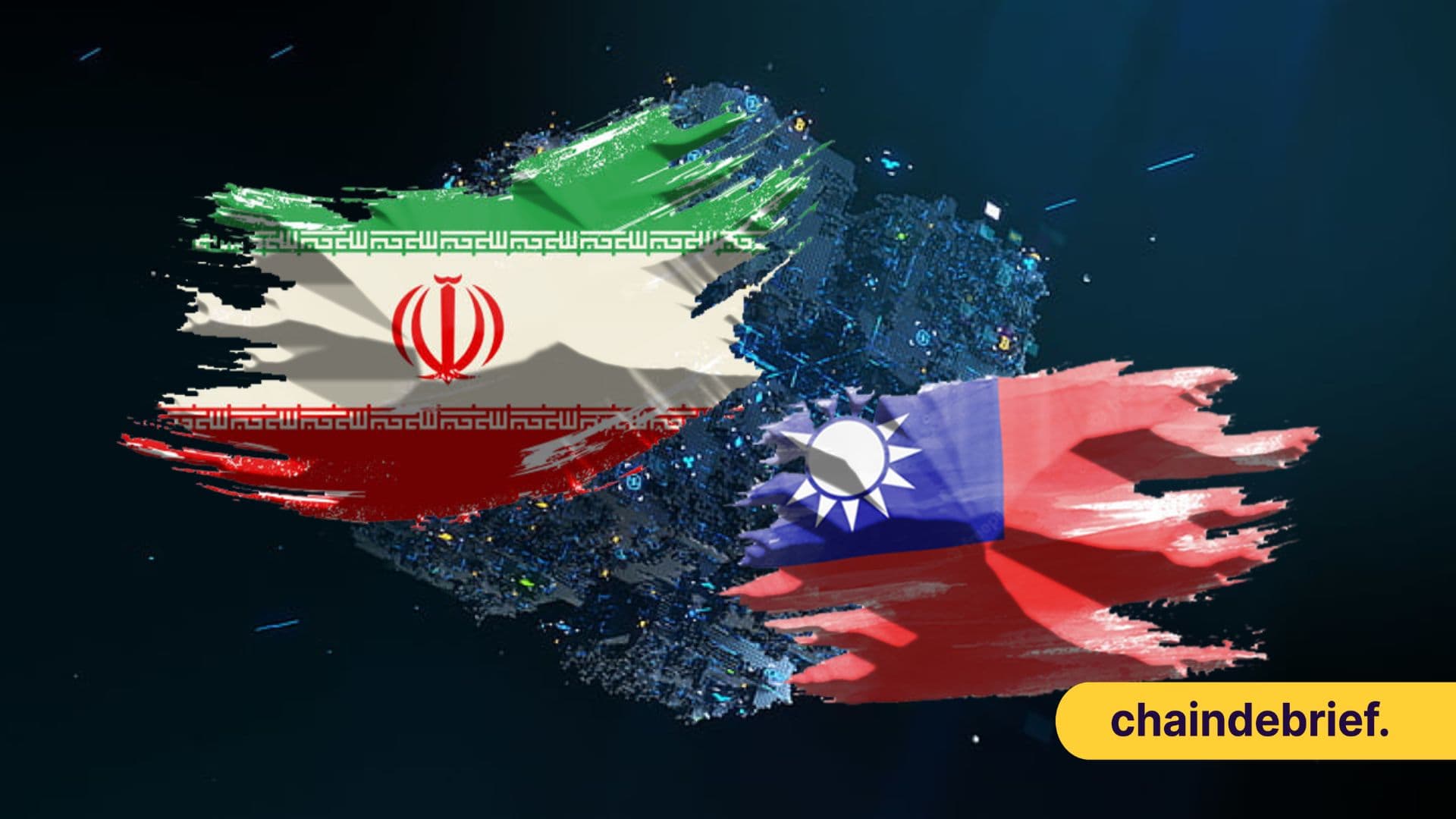
How Iran and Taiwan Are Using Crypto To Bypass Sanctions, Thwart Attacks
Thanks to crypto's decentralized nature, it is hard to enforce laws on-chain. Two countries are using that to their advantage - leveraging Web3.0 to help their own good. Iran's 10M Crypto Imports Iran was the most sanctioned country till Ru
Thanks to crypto's decentralized nature, it is hard to enforce laws on-chain.
Two countries are using that to their advantage - leveraging Web3.0 to help their own good.
Iran's 10M Crypto Imports
Iran was the most sanctioned country till Russia's invasion of Ukraine.
It has been hit by trade restrictions by the United States since 1979 and by the United Nations since 2006.
While the United Nations has since lifted theirs, the economic damage had already been done.
https://twitter.com/financialjuice/status/1556937593731907584
Just this week, it was reported that Iran made it's first ever import using cryptocurrency. According to a representative from the Ministry of Industry, Mine, and Trade, the import was worth $10 million.
The nation also has plans to use "smart contracts for foreign trade".
This follows Iran's plans to avoid using the US dollar to evade sanctions on their petroleum.
Taiwan Adopts Ethereum Infrastructure
Taiwan is a country with a long history.
Under the "One China" policy, China is trying to claim it as part of their territory. While military drills by the Republic are often seen as acts of hostility, the 21st century has brought more attack vectors.
https://twitter.com/FoxNews/status/1554482164095492096
One of them includes cyber attacks, which Taiwan receives "5 million" of everyday.
In response to this, Taiwan has adopted the InterPlanetary File System (IPFS), known for being used by the Ethereum blockchain.
The storage and file referencing system allows peer-to-peer sharing, and enables storing backups on a network of nodes.
"So far, it has not been successfully attacked at all" says Audrey Tang, Digital Minister of Taiwan.
Closing Thoughts
While bypassing sanctions are not ideal, the blockchain's principles of immutability, decentralization, and transparency reign true in both examples.
The underlying infrastructure is also something to marvel at, helping entire countries protect their cyber infrastructure.
Furthermore, the transparency aspect makes it easy to view the parties involved in any transactions. If countries are actually concerned about sanctions being circumvented, they would welcome the blockchain.
Of course, these transactions can be shielded via mixers or privacy blockchains. The United States is acutely aware of this, and has already moved to sanction Tornado Cash.
Also Read: Tornado Cash Sanctioned By U.S. Treasury After $7B Laundered
[Editor’s Note: This article does not represent financial advice. Please do your own research before investing.]
Featured Image Credit: Web Coin Market
Get the Chain Debrief newsletter
Crypto & Web3 analysis, weekly.